
Developing systematic history-taking, physical examination and investigation literacy.
Department of Diagnostic Methods in Modern Medicine
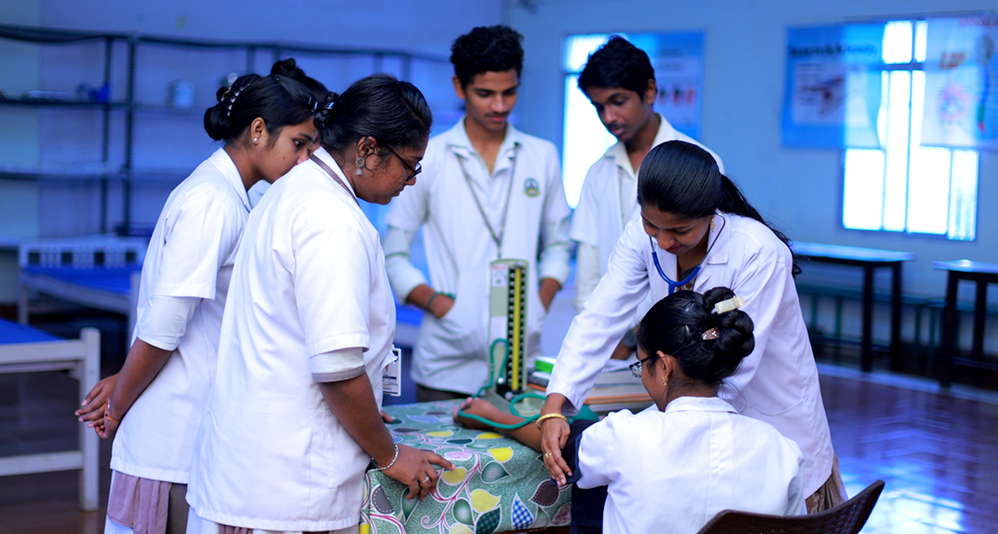
The Department of Diagnostic Methods in Modern Medicine trains students in the structured clinical approach to a patient. The department deals with rapport and approach, history taking, symptom analysis, vital signs, anthropometry, general physical examination and system-wise examination of the abdomen, cardiovascular, respiratory, renal, nervous, locomotor, ear-nose-throat and reproductive systems. Students are introduced to routine blood, urine and stool investigations, radiography and contrast studies, ECG, echocardiography, EEG, ultrasonography, CT, MRI, PET, Doppler studies, endocrine testing and selected diagnostic procedures. Practical work centres on case sheets, physical examination and equipment demonstrations. The goal is not independent specialist diagnosis but competent clinical observation, investigation awareness, recognition of abnormal findings and timely referral.
Students Learning Outcomes
✔ Take and document a structured clinical history
✔ Perform a basic general and system-wise examination within training scope
✔ Understand the purpose of common laboratory and imaging investigations
✔ Recognise abnormal findings and facilitate appropriate medical diagnosis and referral
Staffs